From Cart to Doorstep: How Fast Delivery and COD Shape MARBO 25000 Puffs Orders
There is a specific moment that online shoppers in Singapore know well: the buzzer sounds, a courier hands over a neatly sealed parcel, and the only thing left to do is open it. For many buyers of high-puff-count disposables, that moment matters more than any spec sheet. The number of puffs on the box is interesting, but whether the order actually arrives today, and whether you can pay only when it is in your hands, is what decides where the next order goes. That is the lens I use when I shop, and it is the reason a listing like lana pen plus 9k gets judged as much by its delivery terms as by its hardware.
This is not a review of flavour notes or coil technology. It is a walk through the journey a parcel takes from an online cart to a Singapore doorstep, and why fast delivery and cash on delivery (COD) have become the real deciding factors for buyers who want convenience without uncertainty.
Why the Delivery Promise Outweighs the Spec Sheet
When you are comparing high-puff-count devices, the differences on paper can start to blur. A 25,000-puff device and a 20,000-puff device both promise weeks of use, and both come in a range of flavours. What separates one store from another is not the puff count printed on the shell, but the answer to three practical questions: How fast will it ship? Can I pay on delivery? Will the packaging be discreet?
In a dense city-state like Singapore, buyers expect same-day or next-day arrival as a baseline, not a premium perk. That expectation changes how people shop. Instead of planning a purchase a week in advance, many order in the afternoon and expect the parcel by evening. When a store can meet that rhythm, the product page becomes almost secondary. The delivery promise is the product.
This is also why payment method carries so much weight. COD removes the leap of faith that comes with paying upfront to an unfamiliar seller. You inspect the parcel, confirm it is what you ordered, and only then hand over cash. For a category where buyers are often trying a new brand or a new puff count for the first time, that safety net is worth more than a small discount.
Stage One: Building the Cart Without Guesswork
The order journey starts long before checkout. It starts with browsing, and browsing is where delivery information should be visible early. A store that displays delivery timelines, COD availability and packaging notes on the product page saves the buyer from hunting through policy pages. When I am comparing options, I look for a listing such as marbo vape 25k and immediately check whether the delivery and payment details are stated plainly. If they are buried or vague, I move on.
Cart-building is also where buyers decide how much to order at once. High-puff-count disposables are often bought in small batches because they last longer, so the cart tends to be lighter than it would be for lower-capacity products. That actually makes fast delivery more feasible for the seller, and it makes COD more attractive for the buyer, since the cash-on-hand amount stays manageable.
A good cart experience also reduces the chance of order errors. Clear product names, accurate puff counts and visible stock status mean fewer cancelled orders and fewer delivery attempts that fail because the item was not actually available. For the buyer, that translates into a parcel that arrives when it was promised, not a message apologising for a delay.
Stage Two: Checkout, Payment Choice and the COD Advantage
Checkout is where trust is tested. A buyer who has never used a store before has to decide whether to pay online or choose cash on delivery. Both options have their place, but COD has a particular appeal in the disposable vape market because it shifts risk away from the buyer. You are not sending money into the unknown; you are paying when the product is physically in front of you.
COD also changes the psychology of the order. Because payment happens at the door, the buyer focuses on whether the parcel arrives intact and on time. That puts pressure on the seller to get logistics right. A store that offers COD is essentially saying it is confident the order will reach you, because a failed delivery means no payment at all. That alignment of incentives is why COD has become a trust mechanism rather than just a payment option.
For buyers comparing stores, the presence of COD is often the tiebreaker. It signals that the seller is established enough to absorb the cost of returns and failed deliveries, and that the operation is local enough to collect cash at the doorstep. When I see a catalogue that includes options like lana pix 20k alongside clear COD terms, I read that as a store that expects to complete deliveries, not just process payments.
Stage Three: Packing, Discretion and the Last Mile
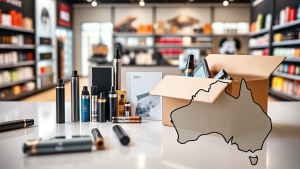
Once an order is confirmed, the next stage is packing. Discreet packaging is not a luxury in this category; it is an expectation. Buyers want a plain outer box or mailer with no product names, no brand logos and no indication of what is inside. That protects privacy at the doorstep, in the lift lobby and with anyone else in the household who might handle the parcel.
Discretion also matters for the courier handover. A well-packed order is compact, sealed and easy to carry, which reduces the chance of damage in transit. For high-puff-count devices, which are often larger than standard disposables, the packaging needs to protect the device without making the parcel conspicuous. Getting that balance right is part of what separates a smooth delivery from a memorable one for the wrong reasons.
The last mile is where all the earlier promises are kept or broken. In Singapore, that usually means a courier navigating HDB blocks, condominiums and office buildings within a tight window. A store that has reliable courier partnerships can offer accurate time slots and keep the buyer informed. A store that relies on ad hoc delivery may leave the buyer waiting without updates. For the shopper, the difference is obvious the moment the buzzer either rings or does not.
This is why I pay attention to how a store describes its delivery coverage. If it names the areas it serves, states realistic timelines and explains what happens if no one is home, that is a sign the logistics are thought through. A listing such as marbo 25k is only as good as the courier who brings it, and the best stores treat the courier experience as part of the product.
What Fast Delivery and COD Really Signal About a Store
Speed and payment flexibility are not just conveniences. They are signals about how a store operates. A seller that can deliver quickly usually holds stock locally rather than dropshipping from overseas, which means the product is genuine and already in the country. A seller that offers COD usually has a physical or local operational presence, because collecting cash requires a real last-mile process.
Together, these two features suggest a store that is set up for repeat customers rather than one-off transactions. That matters in a market where buyers often return to the same seller once they find one that delivers reliably. The product range reinforces this. A catalogue that includes multiple high-capacity options, from lana pix to larger devices, suggests a seller that understands what repeat buyers want and stocks accordingly.
It also helps to look at how a store handles variety across categories. A seller that carries both disposable vapes and heated tobacco alternatives, such as terea singapore products, is usually organised enough to manage multiple supply lines and delivery schedules. That organisational capacity is exactly what makes fast delivery possible in the first place.
For buyers who care about consistency, the pattern to look for is simple: does the store state its delivery window clearly, does it offer COD, and does it keep its packaging discreet? If the answer to all three is yes, the spec sheet becomes a secondary concern. You can order with confidence and let the courier do the rest.
A Closing Checklist for Choosing a Courier-Friendly Store
Before you commit to an order, run through a short checklist. First, confirm the delivery timeline in writing. Look for a stated same-day or next-day window and check whether it applies to your area. Second, confirm that COD is available and understand how payment is collected at the door. Third, check the packaging policy and make sure it mentions discreet outer packaging.
Fourth, look at the product range for signs of local stock. If a store lists several high-puff-count devices, from snowwolf 16k up to larger formats, it is more likely to hold inventory locally and ship quickly. Fifth, check whether the store offers alternatives in the same category, such as lana ultra 2, because a broader range usually means a more established operation with reliable logistics.
Finally, treat the doorstep moment as the real test. If the parcel arrives on time, the packaging is discreet, and the COD handover is smooth, you have found a store worth returning to. If any of those steps fall short, the puff count on the box will not matter much. In the end, the buying experience is shaped less by what is printed on the device and more by how reliably it reaches your door.