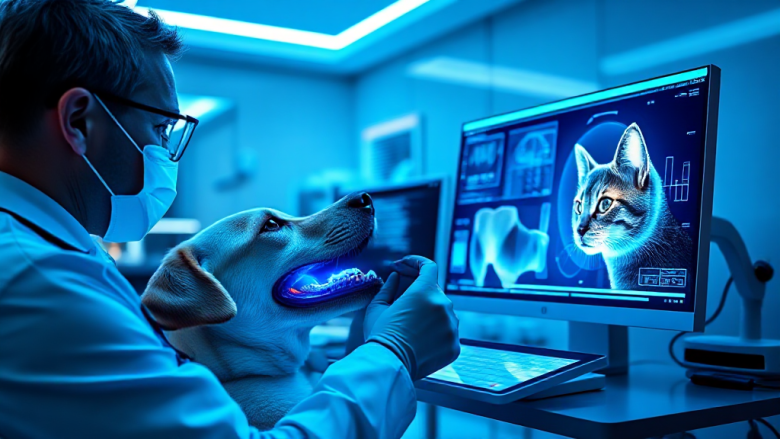
Why AI-Assisted Dental Workflows Are Reshaping Veterinary Dentistry
Picture the end of a busy dental day: a veterinarian balancing a paper chart, a set of intraoral radiographs, a patient history, and a waiting room that never quite empties. The clinical work is done, but the documentation is not. In many practices, that gap between treatment and record-keeping is where time disappears. AI-assisted dental workflows are being developed to close that gap, not by replacing clinical judgment but by handling the repetitive, structured parts of dental care so practitioners can focus on the patient. This is the space that nerovet operates in, building technology specifically for veterinary dental teams caring for dogs and cats.
If you are searching for what nerovet is and whether AI-assisted dental technology fits your clinic, the short answer is this: it is a workflow layer for veterinary dentistry that supports charting, imaging interpretation, and documentation. The longer answer requires understanding why these steps matter clinically, where the friction comes from, and how to evaluate any tool before adopting it.
The Documentation Burden in Veterinary Dentistry
Dental disease is one of the most common findings in small animal practice, and it is also one of the most documentation-heavy. A single periodontal procedure can generate a chart of every tooth, probing depths, mobility scores, furcation involvement, radiograph findings, and a treatment plan that may change mid-procedure. Multiply that by a full surgery list and the administrative load becomes substantial.
The clinical risk is real. Incomplete charts make it harder to track progression between visits, and inconsistent terminology makes it difficult for another clinician to interpret a record. When a patient returns a year later, the value of the previous exam depends entirely on how well it was captured. Structured dental charting is not paperwork for its own sake; it is the longitudinal record that makes preventive care possible.
This is the problem AI-assisted workflows aim to address. Rather than asking clinicians to type faster or stay later, the goal is to reduce the number of manual steps between observing a finding and recording it in a usable format.
Where AI Fits Into the Dental Workflow
It helps to think of veterinary dentistry as a sequence of stages, each with its own documentation demands. AI assistance is most credible when it is applied to specific, well-defined tasks within that sequence rather than presented as a single all-purpose solution.
Intake and History Capture
Before a patient is anesthetized, the team gathers history: eating habits, halitosis, pawing at the mouth, previous dental procedures. Much of this arrives as free text or verbal notes. AI-assisted intake can help organize that information into a consistent structure, flagging relevant history that should inform the oral exam. The clinical value is in consistency, not automation of judgment.
Imaging Interpretation Support
Intraoral radiographs are essential for evaluating roots, bone loss, and lesions that are invisible on visual exam. Interpretation still belongs to the clinician, but AI can act as a second set of eyes, highlighting regions of interest or prompting a closer look at areas that might otherwise be missed in a busy schedule. Imaging support is most useful when it is transparent about what it is flagging and why.
Charting and Procedure Notes
This is where the time savings are often most visible. Tooth-by-tooth charting, probing data, and procedure notes can be captured in a structured format that feeds directly into the medical record. The aim is to reduce duplicate entry and ensure that the chart reflects what was actually done, including extractions, scaling, and polishing.
Follow-Up and Client Communication
A dental visit does not end when the patient wakes up. Discharge instructions, recheck schedules, and home care recommendations all depend on accurate records. When the chart is complete and structured, generating a clear summary for the owner becomes far easier, which supports compliance with home care and timely rechecks.
What AI Can and Cannot Do in Dental Care
Measured enthusiasm is the right posture here. AI-assisted tools are good at pattern recognition, structured data capture, and reducing repetitive entry. They are not a substitute for tactile examination, probing, or clinical decision-making under anesthesia. A tool that claims to diagnose periodontal disease without clinician input should be treated with caution.
The more defensible value proposition is workflow support: helping the team capture what they already know in a form that is complete, searchable, and consistent. That distinction matters when evaluating vendors, because it separates tools that augment the clinician from tools that overpromise.
It is also worth noting that veterinary dentistry differs meaningfully from human dentistry. Species variation, anatomy, anesthesia protocols, and the practical realities of a general practice all shape what a useful tool looks like. Technology built specifically for veterinary teams, rather than adapted from human dental software, tends to fit the workflow more naturally. This is the context in which nerovet presents its AI dentistry focus for dogs and cats.
Evaluating an AI Dental Workflow for Your Clinic
Adoption decisions should be grounded in practical criteria rather than marketing claims. The following questions are a reasonable starting point for any practice considering AI-assisted dental technology.
- Does it fit the existing workflow? A tool that requires a complete overhaul of your dental routine is less likely to be used consistently than one that integrates with how your team already works.
- Is the output clinically usable? Structured charts and notes should be readable by another clinician without translation.
- How does it handle imaging? Look for transparency about what the system flags and how the clinician remains in control of interpretation.
- What does the training and support look like? Even intuitive software needs onboarding, and dental teams are busy.
- Does it respect record-keeping standards? The medical record is a legal and clinical document; the tool should make it better, not harder to audit.
A simple comparison can help frame the decision. Manual charting is familiar and requires no new software, but it is time-consuming and prone to inconsistency. Generic practice management modules capture basic data but may lack dental-specific structure. A dedicated AI-assisted dental workflow aims to combine structured capture with time savings, at the cost of adoption effort and subscription expense. None of these options is universally right; the fit depends on case volume, team size, and how much dental work the practice handles.
Common Mistakes and a Sensible Adoption Path
The most common mistake is treating AI as a replacement for clinical training. Teams that expect the software to do the dentistry will be disappointed, and patients may be poorly served. The second mistake is adopting a tool without a pilot period. Running a new workflow alongside existing records for a set number of cases gives the team a chance to identify friction points before committing fully.
A third mistake is neglecting the follow-up stage. If the structured chart does not translate into clearer discharge instructions and recheck reminders, much of the value is lost. The documentation effort should pay off in better continuity of care, not just a tidier record.
A sensible path looks like this: start with a small group of dental cases, use the tool to capture charting and imaging notes, and review the output with the clinicians involved. If the records are more complete and the team spends less time on duplicate entry, the case for expansion is stronger. If not, the pilot has done its job by preventing a costly mistake.
The broader shift is toward treating dental documentation as a clinical asset rather than an afterthought. AI-assisted workflows are one way to make that shift practical, and the practices that evaluate them carefully, with clear criteria and realistic expectations, are the ones most likely to see the benefit. For teams exploring this space, nerovet is a starting point for understanding how AI-assisted technology is being applied to veterinary dental care.